Monday, September 22, 2014

On Process


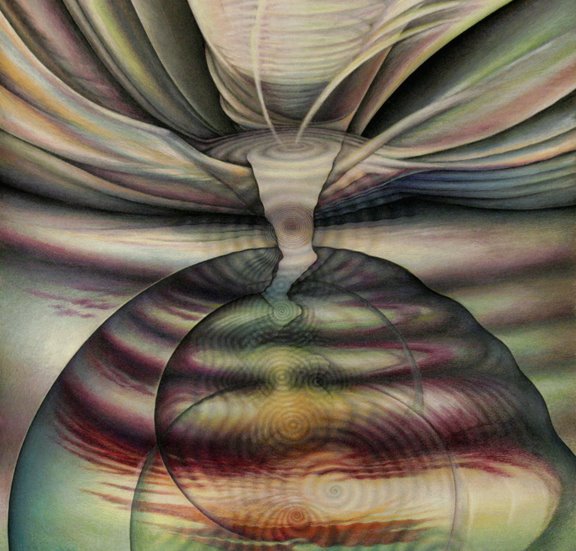
During the time the sabbatical show was up I was often asked about my process. So I'm hoping to provide some background on the way my work develops in the next two posts. This one will focus on the drawings and the jump into bowls and I'll mainly stick to the techniques and visual goals. Some of the things that were behind the particular imagery  were unknown to me consciously at the time I was doing them. Someone now will talk about their associations with the work and I’ll feel surprised then think about it and realize it was part of another level of motivation that I hadn’t seen before. It’s been like that since I started the drawings. It’s probably the most mysterious body of work I’ve ever done in terms of how little I knew about why I was doing it and where it was heading. The emotional philosophical pastel drawings that dominate this blog have been my inner mirror since the early 80s, but the covered up metaphor of the stitched drawings only let me see the technical and formal goals and not that I’d been fighting to hold something back for years. The challenge of accomplishing what I wanted to see happen, to get people to see a force behind the visible surface pushing out was enough without me knowing what it was. All of my drawings try to defy indentification and draw attention to the feel of behind the scenes forces. The drawings began with watercolor leading the way. Like the big pastel shapes, watercolor is a means to concentrate on the abstract composition and find what I needed to see. Then I attached the duralar. My first works with duralar were two large graphite drawings each of which took over two years. This  broke me of my need to finish and get on with things, so I could stay as long as necessary with the development of beautiful areas of tone. Having a technical preoccupation is my strategy for keeping my conscious mind from interfering with the decisions of my visual mind. Which is not to say I didn’t think about many different ideas that came from the images. Illusionistic work generally opens a window to the world created beyond the picture plane so I was interested in trying to get the drawing to push out at the viewer instead of falling back. It was what I'd begun to think about with the second big drawing, In these drawings I sewed duralar over the paper along the top edge to secure it against slippage, since the graphite work on the duralar reinforced and synchronized with the drawing on the paper. It occurred to me that it would be interesting to include the stitches and something in me immediately saw them as shades of red. I wanted a spontaneous start since my method of drawing on duralar was so time consuming, which is why instead of a graphite drawing underneath I worked with watercolor, feeling for the shapes that best matched what I needed at the time. Stitching the duralar was a way to draw attention to certain areas and then a new graphite challenge was to create the illusion that the surface was pulling at the stitches.  The whole time I was doing them I was conscious of how tormented some of them, maybe all of them looked and when I was showing them to my classes said over and over that I didn’t really understand where these were coming from myself yet. A clue was that when I started working 3d I stopped doing the drawings and went back to my pastel side. On one level the drawings represented what was trying to burst into the physical world, to get out from behind the window into imaginary space and have it exist as an actual entity. They were also preparing me for what I would be painting on 3D surfaces though that was still far in the future.

The real technical leap of course was 3d. It wasn’t as foreign as it seemed to those who knew only the work I’ve shown. Many times over my adulthood I have made a little series of figures or beetles, always emphasizing face and body expression as presents for family and friends. I wanted to learn the wheel and became immediately interested in the bowl's shape. Without planning it I saw that I needed figures in the bowls and that I wanted to paint the world they came from around them. At the time I wasn’t aware of the obvious connection of myself pushing out into the world or my interest in body and facial expression taking over my public work.
The bowls represented the process of emerging from the portal. As a beginner throwing bowls I was dealing with my limitations and how to make use of them. I waxed part of each bowl before glazing so I could mimic and go off on what the glaze and other imperfections did. The illusionistic space exists but the figure emerges from it. The first bowl touched on all the ideas that would unfold in this adventure.It's been a chance to explore the interconnections that bind everything together, to acknowledge what it takes to support human life. An idea I first came across in Gregory Bateson's work probably surfaced here too, that who we are is not just the physical self but self and environment because we couldn’t survive without all of the systems that link with our existence. In all of them I wanted to give more of a feeling of us growing rather than being made, of life as an continuous individuation of a pervasive consciousness.  I’m thinking about the process of manifesting physically, the hopes, difficulties and doubts, but connected at the roots to what energizes and supports growth.

Saturday, August 30, 2014

New Work

On Using Figures

One of the reasons I have rarely used figures in my work has been because I wanted the viewer to have a first person experience, to have the feeling of seeing the relationships, circumstances and qualites expressed for themselves. As visual philosophy all of my images hope to stimulate ideas that build on the vision that poses questions about assumptions. With "Stance" (the figure on the right in the above announcement) I suggest an alternative to the identification with the external. For some reason it feels most natural to use the figure to bring attention to the mind and consciousness looking through the changing physical being. It's understandable that people have been guided into over identification with the external because it suits the goals of marketing. People accumulate physical information in the form of stuff in order to build the outside image. But the reality of the consciousness looking out is unchanged, and the outer image is just a small ftraction of the reality actually experienced. For me this work had to be three dimensional to break through the invisible barrier of the image surface and be in the world with the viewer so as to communicate mind to mind.
And it gives me the pleasure of having my art smile at you like another being in the world and occasionally catching you smiling back.

Monday, August 11, 2014

(Re-Viewing) Consciousness


Imaging Consciousness

Interest in the brain and how it works is ultimately an inquiry into consciousness. One longstanding assumption about where consciousness is may be interfering with visualizing and understanding more about it. In all of my study of the brain I've seen no claim as to where consciousness is located, or even  a theory of how it arises from the substance of the brain. Thinking about consciousness has been limited by the image of it located somewhere in our head, an idea with no scientific support. A cascade of restricting associations grow from this. One artificially confining result comes from imagining consciousness as an aspect of the identification with the external physical self. This leads us to see the body as a container for a limited personal  consciousness. Though the physical body is the image others see, its not really the whole self we experience. As an image it is incompatible with consciousness as we know it, where thoughts soar beyond the physical and witnessing the external drama can be a source of amazement and wonder. The Hindu idea of "moksha" which religious scholar Alan Watts defined as"liberation from the hallucination that you are just 'poor little me'" is freedom from the confining image. The physical being can be thought of as the vehical through which the experience of life is seen. A more approprite analogy for understanding physical participation in consciousness might be the eye. The eye is to the mind as the person is to consciousness, a sensing mechanism for the field of consciousness that is channeled through it, filtered by the frequency created by our personal being. Just like there are wavelengths that the eye doesn't see and thus is not included in our reality, who know what realms are beyond our  mental spectrum. The eye is not the whole of seeing but is an instrument for it, guided by the mind's awareness. The individual is a distinct input with particular sensitivities, a unique character and role to play that provides insight to the encompassing spectrum of flowing awareness that Lao Tzu called the Tao. Enlarging our image of consciousness expands the sense of responsibility that comes with the feeling of connection. The brain encourages operating on this wavelength with endorphins for acts of connection meant to stimulate our evolution co-creating the future. Striving to learn and grow and exceed previous limits is the gift we offer the whole, and is rewarded with the best brain chemistry.
   Understanding more about the brain enables us to draw more sophisticated analogies to help us reinvision consciousness.This can free us from the isolation that comes from thinking of ourselves as separate. Perhaps living with wireless communication in a world of invisible frequencies and bandwidths creates new imagery for envisioning the encompassing connected consciousness within which we inform and  participate.


Monday, July 14, 2014

Expansion


Organic Intelligence

First posted June 30, 2010. This is the second most popular essay.
Since the sixties, thinkers have been suggesting it’s time to shift our model of reality from the giant machine to the image of the universe as an organism. Fritjof Capra talks about the shift in worldview that came with quantum mechanics in his wonderful book “The Turning Point”. He writes, “The universe is no longer seen as a machine made up of multiple objects, but has to be pictured as one indivisible, dynamic whole whose parts are essentially interrelated and can be understood only as patterns of a cosmic process.” Seeing the whole is essential to understanding the significance in a situation and is the essence of ecological consciousness. We understand the big picture through concrete vision as well as within our spatial embodied imagination.
The heartbreaking pictures of the oil gushing into the Gulf of Mexico can be seen as our body bleeding. The globe that supports us all is pierced and hemorrhaging. All the images taken from space that show the growing damage hurt my heart like damage to my own body. Which it is, given I am absolutely dependent on it. A caller to the Diane Rehm show was the first to express out loud the fear this oil spill could kill the whole planet. The satellite and helicopter pictures are the diagnostic scans of our global body. The compartmentalized, rapacious way of looking at the planet that grows from the machine model avoids seeing the interconnections. It may suit the corporati and greed-driven, but an attitude of seeing the planet as a giant reservoir of resources to be exploited interferes with the balance of the all-inclusive organism. Chief Seattle said, “The earth does not belong to us, we belong to the earth.“ Stabbing oneself in the hope of riches expresses reckless self-loathing.
Organic intelligence is alert to the health of the whole. Since everything is part of an intricate network of interrelated systems, we’re happiest (best brain chemistry) when we’re developing our abilities and finding challenging ways to make use of them. This adds our health to the health of the larger organism in which we participate. Moving in harmony with the flow of being around us is natural if the underlying model of the universe has ourselves as part of an organic whole. If we’re disrupting other aspects of the larger being we’re like a cancer, growing without heed of the damage we cause, sucking up vital resources without regard to the host. Much of what divides us and keeps us from acting together is imagery that places us outside of things, casting us as the one that tinkers with the machine. This is the same image as the large scale Maker, which also puts the traditional God outside us.
The Gaia Hypothesis came out decades ago. James Lovelock’s conception was of a consciousness within the earth itself. Just like the adjustments made in our own body, it responds to imbalances. This universal motion of homeostasis exists on every level and in every system, adapting to change to restore equilibrium. Persisting in the belief in man’s dominion over the earth may lead to the earth itself wiping out the source of destruction.
The materialistic world of separate things has resisted seeing our interconnectedness because it’s a threat to a competitive attitude. Accumulating and controlling more of the planet does not serve the good of the whole. But there’s evidence mounting of the grassroots shift to a more responsible way of seeing. Two website groups that have contacted me recently are dedicated to positive change. The Superforest site ( http://teamsuperforest.org/superforest/ ) sees the essence of problems and solutions in the world as revolving around manners. Treating everyone and everything with respect means being aware of the consequences of our actions. As they say in their Humanifesto, dumping pollutants in a river is bad manners. The narrow sight lines of a competitive stance focus on the end result and miss much of what’s happening now and the consequences of single-mindedness. A cooperative attitude is tuned to the moment because cooperation is all about adjusting to the circumstances and harmonizing with others. The current most popular entry at The Truth Contest site
The Truth Contest ) focuses on the Present and the nature of consciousness. Their site is committed to an ongoing attempt to articulate truth, to search out the universals that bind us. They turn the idea of a contest on its head since there’s no competition, no prizes, just an on-going dialogue that features the entries that generate the most interest. Extending themselves for the good of the whole, these sites are examples of healing forces, the action of Gaia’s immune system. They give me faith in the goodness of human nature and optimism about the future. I’m happy to now be connected to both efforts.